Warnings Preceded the Breach
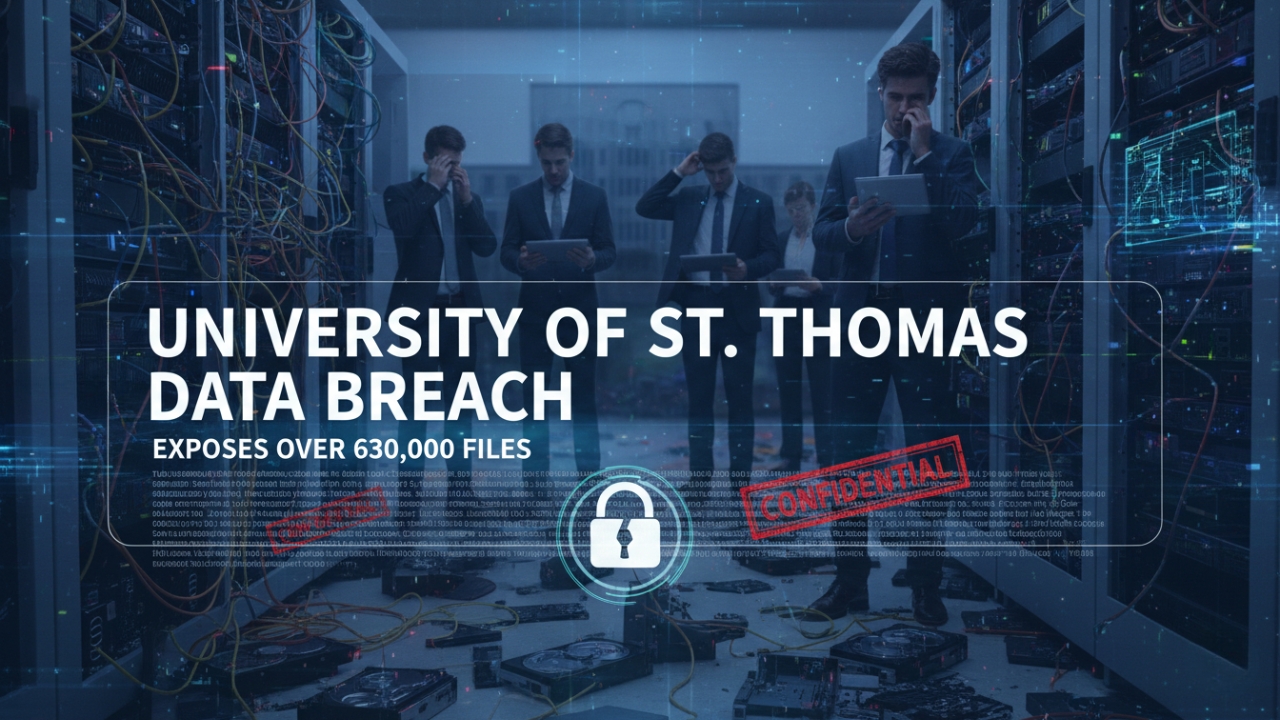
Three months before a devastating cyberattack exposed more than 630,000 files from the University of St. Thomas (UST), internal communications show that the school’s leadership had already received warnings about cybersecurity vulnerabilities.
According to documents obtained by the Houston Chronicle, the concerns arose during the university’s transition between IT providers from Ellucian to OculusIT earlier in 2025.
Emails from that period reveal apprehension about how access controls were being managed and whether proper safeguards were in place as the new vendor took over the school’s infrastructure.
Ellucian’s contract expired on July 31, 2025. Within two weeks, under OculusIT’s management, UST was hit by a major data breach that resulted in the theft and publication of hundreds of thousands of internal files on the dark web.
The Scope of the Breach
The stolen data reportedly includes student grades, vaccination records, expunged criminal files, internal investigations, financial documents, and bank account details, as well as personal information for both faculty and students.
The cache appears to date back to the early 2000s and may include sensitive settlement agreements and compensation data for senior staff.
While it is unclear how many individuals were directly affected, UST currently serves more than 4,300 students and has over 21,000 alumni. Investigators have confirmed that the breach likely originated in mid-August 2025, just days before the start of the fall semester.
During the attack, systems were taken offline, cutting students off from class schedules and financial aid portals. At first, officials believed no data had been stolen, but later confirmed that the hackers had exfiltrated a massive trove of files.
Transition Challenges and Oversight Concerns
Experts note that IT provider transitions are particularly risky periods for organizations.
During handovers, security configurations, authentication protocols, and system monitoring tools may be temporarily weakened, conditions that attackers often exploit.
The incident has raised questions about what measures OculusIT had in place to safeguard the university’s systems and why the intrusion was not detected sooner.
Both OculusIT and Ellucian have since issued statements reaffirming their commitment to data protection but declined to comment on specific operational details.
University Response
UST confirmed that it is working with external cybersecurity specialists and federal investigators to assess the full scope of the incident.
Officials said they are strengthening internal security controls and will notify and provide credit-monitoring services to anyone whose personal data was compromised once the review is complete.
In a public statement, the university emphasized its commitment to improving cybersecurity resilience and protecting the campus community from future threats.
Cedonix Analysis: Lessons for Institutional Cyber Resilience
Cedonix cybersecurity analysts observe that this incident highlights a recurring pattern in higher education, where cyber vulnerabilities emerge during vendor transitions and system migrations.
Universities often operate complex IT environments that combine legacy databases, student management systems, and third-party applications, creating multiple points of exposure.
To prevent similar breaches, Cedonix recommends:
- Conducting risk assessments before vendor transitions
- Implementing continuous monitoring and endpoint protection throughout changeovers
- Maintaining clear accountability between outgoing and incoming service providers
- Establishing a post-transition audit to confirm all systems meet security baselines
These measures can help educational institutions avoid gaps that lead to major breaches and ensure a smoother, more secure IT handover process.
Source: Houston Chronicle – “University of St. Thomas cyberattack and IT transition”